The Subatomic Universe: Unraveling the Standard Model, Higgs Boson, and the Pursuit of Dark Matter
Explore particle physics: from the Standard Model's triumphs to quantum anomalies, colliders like the LHC, cosmic rays, and next-generation quests for dark matter.
Particle Accelerators: Recreating the Big Bang
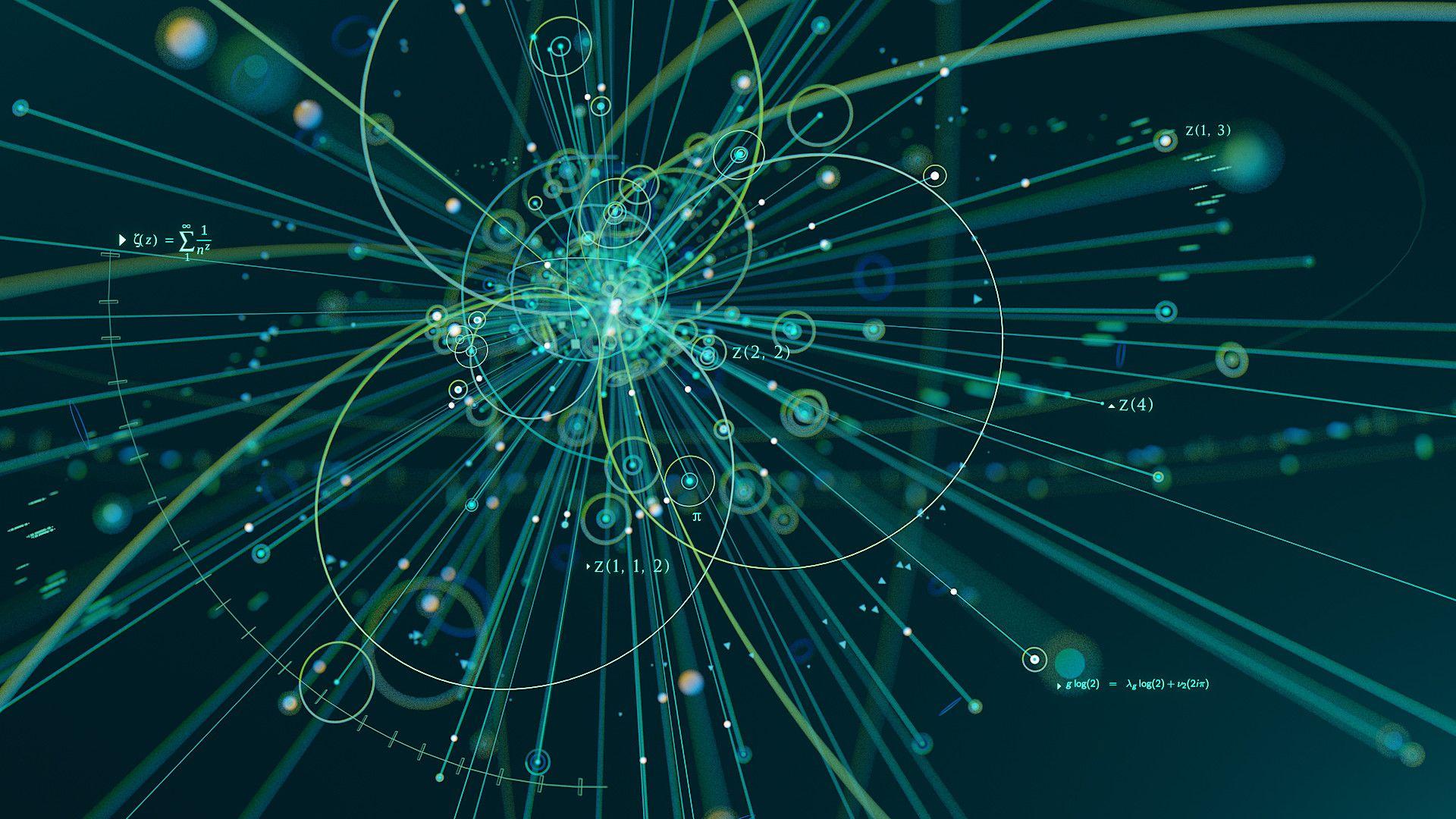
Particle accelerators are humanity's most powerful microscopes, propelling charged particles to near light speed and smashing them together. These collisions recreate the energy densities of the early universe, moments after the Big Bang. The Large Hadron Collider (LHC) at CERN is the most famous example, enabling the discovery of the Higgs boson in 2012—a particle that endows others with mass via the Higgs field. This landmark confirmed the Standard Model but also deepened mysteries: why is the Higgs mass so fine-tuned, and does it interact with dark matter?
The Standard Model: Successes and Gaps
The Standard Model classifies all known fundamental particles into quarks, leptons, and force-carrying bosons. It accurately predicts electromagnetic, weak, and strong interactions—from nuclear fusion to particle decay. Yet it remains incomplete. Gravity is absent; dark matter and dark energy, which constitute roughly 95% of the cosmos, are not explained. These gaps drive theorists to search for a Theory of Everything, a unified framework that would merge quantum mechanics with general relativity.
Quantum Anomalies: Whispers of New Physics
Quantum mechanics reveals a world where particles can be in multiple places at once, tunnel through barriers, and remain entangled across light-years. Small but persistent deviations from Standard Model predictions—called quantum anomalies—suggest unknown particles or forces. Experimental teams worldwide are refining measurements of muon magnetic moments, B-meson decays, and other processes to catch these subtle signals. Each anomaly could be a crack through which new physics emerges.
Cosmic Rays: Nature's Own Collider
Beyond human-built accelerators, cosmic rays provide a natural high-energy laboratory. These particles—primarily protons and atomic nuclei—originate from supernovae, active galactic nuclei, and other violent cosmic events. When they strike Earth's atmosphere, they create cascades of secondary particles. Observatories like the Pierre Auger Observatory detect these showers, allowing scientists to study particle interactions at energies far beyond the LHC's reach. Such data help probe the behavior of matter under extreme conditions and may reveal new physics.
Future Horizons: Next-Generation Tools and Theories
The next leap in particle physics will come from more powerful colliders, such as the proposed Future Circular Collider (FCC) with a 100-kilometer circumference, and advanced detectors with unprecedented sensitivity. These instruments aim to explore teraelectronvolt energy regimes where new particles—like those predicted by supersymmetry or extra dimensions—may appear. International collaborations, machine learning for data analysis, and theoretical innovations continue to shape the quest. Each answer uncovers deeper questions, reminding us that the subatomic world holds keys to the universe's origin and destiny.