Cosmic Evolution and Relativity: Stars, Gravity, and the Fabric of Space-Time
Explore how gravity, stellar lifecycles, and gravitational waves interconnect in cosmic evolution and Einstein's relativity.
The Big Bang and Expanding Universe
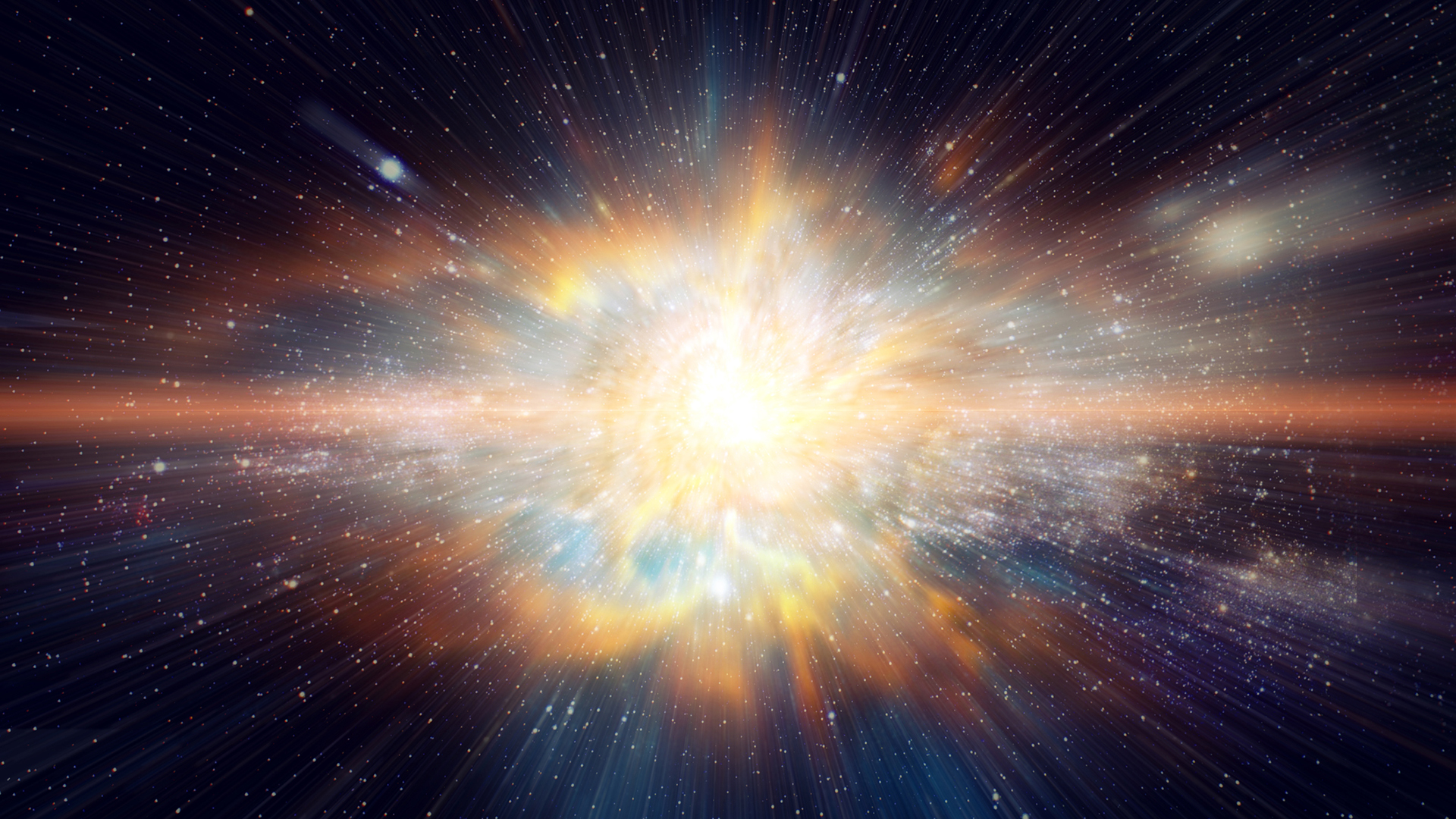
Modern cosmology rests on the Big Bang theory, which describes the universe's origin from an infinitely dense singularity roughly 13.8 billion years ago. Since then, space has been expanding, carrying galaxies away from one another. This framework explains the cosmic microwave background and the abundance of light elements, forming the bedrock of our understanding. Observations of distant supernovae and galaxy redshifts, combined with Einstein's General Relativity, continue to refine the expansion rate and the role of dark energy.
Gravity and the Space-Time Continuum
The space-time continuum merges three spatial dimensions with time into a dynamic four-dimensional fabric. Mass and energy warp this fabric, producing gravity—the dominant force on cosmic scales. This insight, central to General Relativity, explains planetary orbits, black holes, and the light-bending effects of gravitational lensing. Scientists at institutions like MIT are probing space-time's deepest secrets by studying extreme environments such as neutron star mergers and black hole collisions.
Gravitational Waves: New Eyes on the Cosmos
Gravitational waves, ripples in space-time predicted by Einstein, were first directly detected in 2015 by LIGO. The landmark event GW170817—a neutron star merger observed in both gravitational waves and light—opened a new era of multimessenger astronomy. These signals carry information about cataclysmic events, enabling tests of relativity and insights into the nature of dense matter. Collaborations among LIGO, Virgo, and observatories worldwide continue to expand our observational capabilities.
Beyond the Known: Extra Dimensions
Advanced theories propose that the universe may contain extra spatial dimensions beyond our perception. These dimensions could help unite gravity with quantum mechanics, fulfilling the dream of a unified theory. By examining how gravitational waves propagate and how particles behave at high energies, physicists search for clues that might reveal these hidden dimensions, potentially reshaping our understanding of reality.
Stellar Lifecycles: Engines of Element Creation
Stars are not mere points of light; they are nuclear furnaces that forge elements through fusion. Their lifecycles—from formation in cold nebulae to explosive supernovae—drive the chemical enrichment of the cosmos and influence the evolution of galaxies.
Nucleosynthesis: From Hydrogen to Heavy Elements
In stellar cores, hydrogen fuses into helium, then into carbon, oxygen, and iron. Massive stars end their lives in supernova explosions, scattering these elements into space—the raw materials for new stars and planets. Each generation of stars inherits the chemical legacy of its predecessors, creating a cosmic cycle of creation and renewal. This process explains the abundance of elements necessary for life.
Stellar Feedback: Shaping Galaxies
Young stars emit intense radiation and stellar winds that ionize surrounding gas, often triggering further star formation. Supernova explosions can clear out gas clouds, regulating the rate of star birth and affecting overall galactic structure. This feedback loop is crucial for understanding how galaxies evolve from chaotic early forms to the orderly spirals and ellipticals we see today.
Cosmic Forces: A Balance of Gravity and Electromagnetism
While gravity dominates on large scales, electromagnetic forces also play a role in cosmic evolution. Plasma cosmology suggests that ionized matter and large-scale magnetic fields can influence galactic dynamics, challenging the purely gravity-centric model. Researchers are testing alternative theories to ensure a complete picture of the universe's behavior. The interplay of these forces is especially important in environments like accretion disks around black holes and the interstellar medium.
Implications for Modern Physics and Technology
The study of space-time and cosmic forces has practical applications, including the GPS system, which relies on relativistic corrections. Gravitational wave astronomy provides new ways to test fundamental physics, from the nature of gravity to the behavior of matter under extreme conditions. By integrating data from observatories such as LIGO and theoretical work from institutions worldwide, scientists continue to unravel the universe's most profound mysteries, connecting the microcosm of quantum particles with the macrocosm of galaxies.