Distant Worlds, Hidden Oceans, and Cosmic Waves: New Insights from Space
Infrared telescopes reveal hidden black holes, exoplanet atmospheres, and ice-covered oceans reshaping our view of the universe. Explore the latest discoveries.
Hidden Black Holes and Galactic Cores
Surprising Giants in Dusty Disguise
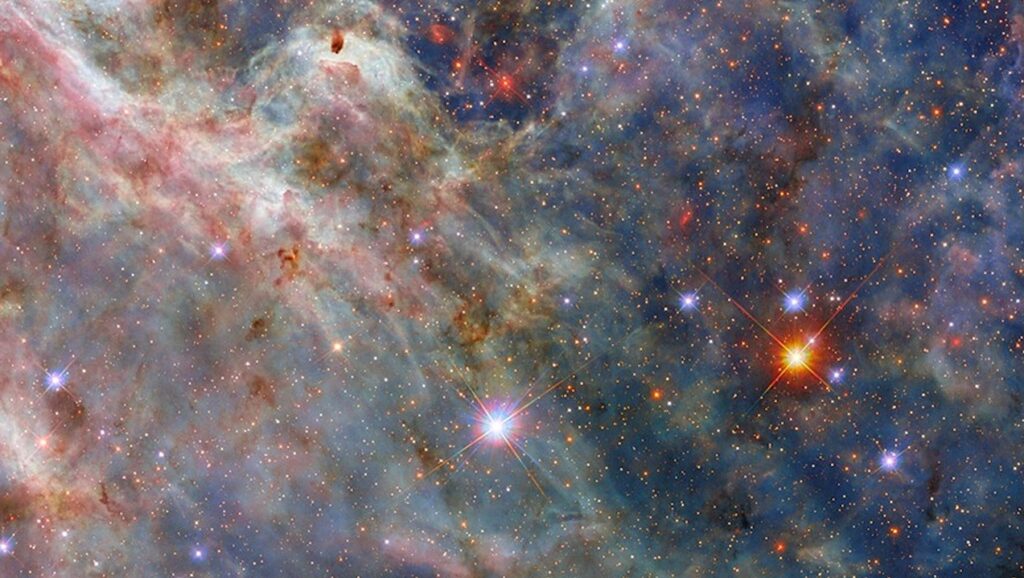
Not all bright objects in the universe are far away. Some lurk in the crowded hearts of nearby galaxies, shrouded in thick gas and dust. In visible light they appear dim, but mid-infrared images unveil warm dust, jets, and ring structures around compact objects. By analyzing that glow, astronomers estimate how fast central black holes feed, how much energy they release, and how that feedback shapes their host galaxy. The pattern is striking: actively feeding cores are far more common than previously assumed, and their outbursts can either spark or suppress star formation.
Ancient Light from Infant Galaxies
Peering into deep space means looking back in time. The farther a galaxy lies, the longer its light has traveled, carrying a delayed message from the cosmic past. As space expands, that light stretches from blue into infrared, giving astronomers a way to measure the universe's age. High stretch values reveal infant systems that formed before spiral arms and orderly disks became common. Infrared telescopes capture these faded signals, turning them into snapshots of a toddler-stage universe full of irregular shapes and rapid growth.
Alien Worlds and Hidden Oceans
Reading Atmospheres in Starlight
When an exoplanet transits its star, a thin ring of atmosphere imprints on the starlight. Sensitive instruments split that light into many colors, revealing absorption fingerprints from water vapor, carbon molecules, and hazes. Combined with temperature and pressure models, those signals turn vague descriptions like 'hot giant' into detailed climate types grounded in data.
Ice Shells and Subsurface Seas
Some of the most intriguing places for chemistry lie under ice. Several moons in distant systems appear to harbor global oceans beneath frozen crusts. Flyby probes track wobbles, measure magnetic fields, and detect plumes rich in salts and organics. These clues point to warm rocky cores in contact with deep water, powered by tidal flexing. Such oceans can persist for extremely long periods, expanding the definition of 'habitable' beyond Earth-like surfaces to sealed environments with steady energy and nutrient gradients.
Dust Storms and Electrical Weather
Bare, dusty worlds may seem static, but close-up data show otherwise. On at least one neighboring planet, dust storms can envelop almost the entire globe. Within those storms, countless grains collide and build electrical charge, producing weak flickering discharges—miniature lightning inside dust clouds. Lab experiments show these sparks can break molecules and drive new reactions, gradually reshaping surface chemistry. Over time, such 'electrical weather' may explain puzzling salt deposits and unusual oxidation patterns.
Cosmic Weather and Multi-Wavelength Views
Magnetic Curtains on Distant Worlds
Shimmering auroras are not unique to Earth. Giant planets, ice giants, and some moons host their own displays where charged particles slam into upper atmospheres along magnetic field lines. These emissions often shine brightest in far ultraviolet, infrared, or radio bands—invisible to human eyes. Specialized sensors map the shapes and shifts of these auroral ovals, revealing the strength and geometry of magnetic fields and how much energy is dumped into the space environment.
Combining the Spectrum into a Full Picture
Different wavelengths act like different diagnostic tools. X-rays mark violent shocks, optical light sketches star clusters, infrared highlights dust, and radio picks up jets and magnetic ripples. No single band tells the whole story. Modern studies routinely combine many, sometimes adding gravitational waves or particle data. A merging pair of black holes might send out spacetime ripples while surrounding gas glows across the spectrum. Matching these signals gives a 3D picture of masses, spins, orbits, and feeding flows.
Tools That Turn Whispers into Knowledge
Imaging, Spectroscopy, and Cryogenics
Wide-field near-infrared cameras scan large sky areas for faint objects whose colors hint at heavy light stretching. Spectrographs then slice that light into thousands of channels to reveal precise distances and chemical compositions. Mid-infrared instruments face a challenge: everything warm, including the telescope, glows at those wavelengths. Engineers cool detectors to extremely low temperatures so they don't drown in their own heat, revealing buried star-forming clouds and complex molecules.
Satellites as Quiet Enablers
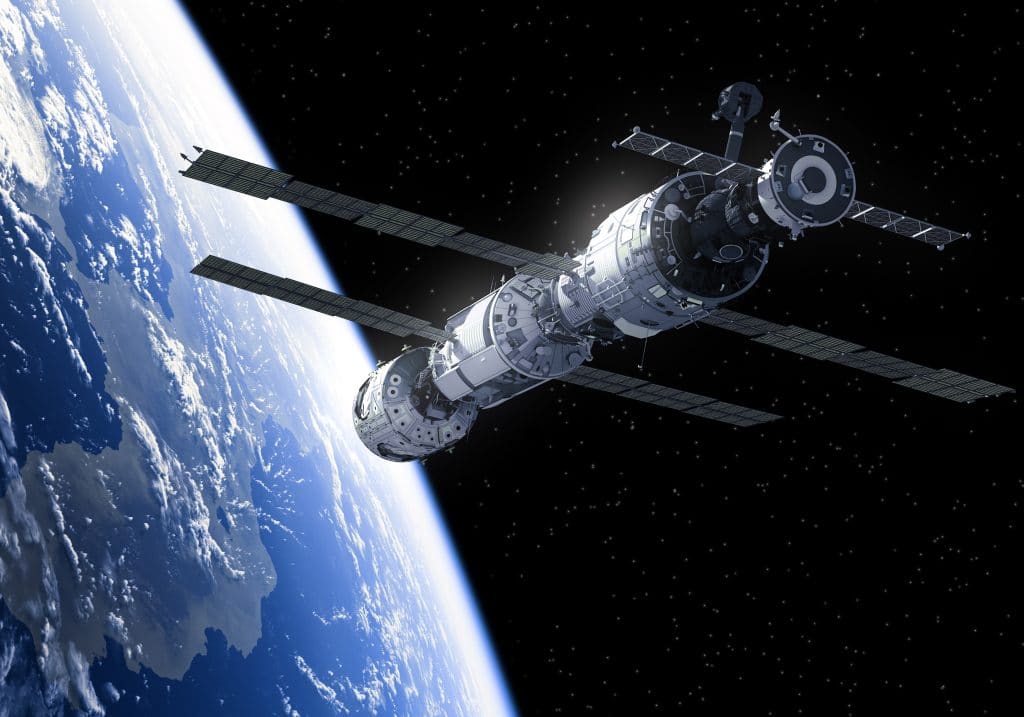
Earth-orbiting satellite fleets act as proving grounds and support systems. Imaging platforms refine techniques for scanning large areas repeatedly; communication networks relay data from distant probes; precise timing sync allows tracking fast bursts. Decades of managing massive data streams have pushed forward methods for storing, compressing, and mining huge archives, which now help pull weak trends from deep-sky surveys and planetary readings.
Why These Quiet Revolutions Matter on Earth
A Broader View of Planets and Life
As different observations and simulations are woven together, boundaries blur. 'Planetary climate' becomes part of a wider comparison across scorched hot giants, frozen moons with oceans, and dusty worlds shaped by storms. Ideas about where life might thrive expand from the narrow habitable zone to thick atmospheres, sheltered subsurfaces, and long-lived ice-covered seas. This broader view helps frame Earth's own future—seeing how other atmospheres evolve sharpens our understanding of fragility and resilience.
From Exotic Labs to Everyday Technology
The same drive that pushes sensors to read alien molecules across light-years ends up improving tools closer to home. Low-noise detectors migrate into medical imaging; radiation-hardened electronics find use in remote monitors; navigation methods for probes refine logistics and emergency response. Moreover, widespread satellite imagery shifts public intuition: planets are no longer static marbles but evolving systems. In English-speaking societies where decisions about energy, climate, and technology depend on understanding large-scale processes, that change in intuition matters. The universe becomes an active laboratory, sending back data that reshape both cosmic stories and everyday choices.