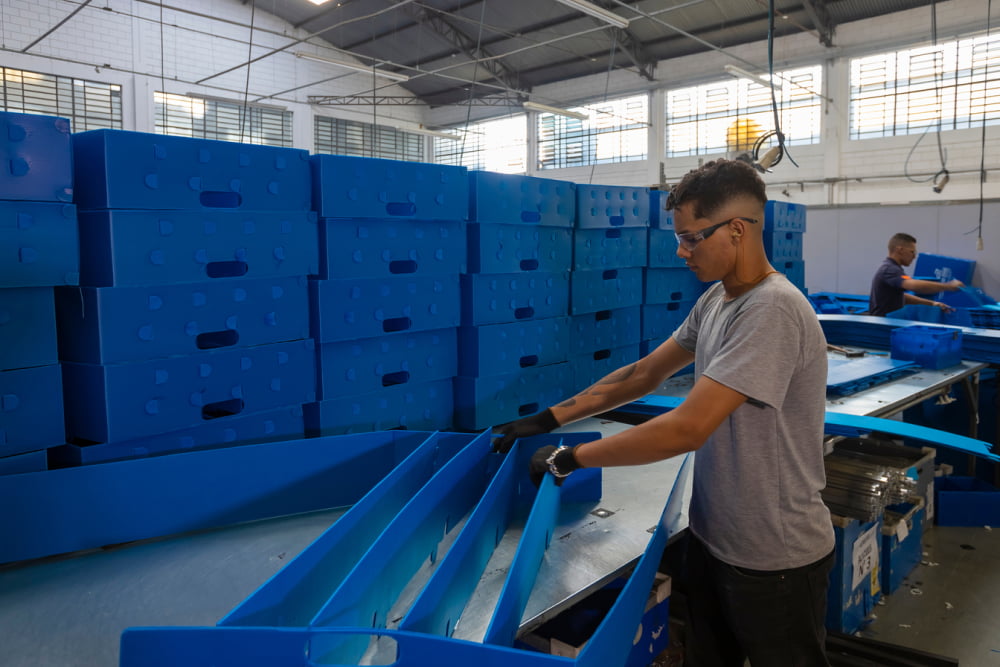
Digital Twins & Rapid Prototyping: Accelerate Development with Virtual Testing and Smart Fabrication
Learn how digital twins, virtual testing, and rapid fabrication methods like 3D printing and CNC machining speed up product development from concept to production.
From Digital Twins to Physical Prototypes
Product development is accelerating through the use of digital twins and virtual testing. Engineers no longer rely solely on physical models; instead, they adopt a fail-fast philosophy, simulating stress, flow, and assembly in software. Each simulated failure becomes a learning opportunity, enabling dozens of iterations per day without cutting a single piece of material. This approach is especially valuable in safety-critical industries like aerospace and automotive, where design maturity must be assured before physical production begins.
Virtual Validation: Failure as Feedback
How Engineers Iterate Faster
By creating a digital twin—a virtual replica of the product—teams can test extreme conditions, validate tolerances, and optimize designs in real time. The goal is to build a functional foundation quickly, then refine through rapid iteration. A single afternoon can replace weeks of physical prototyping. This reduces costly rework and shortens development cycles significantly.
Selecting the Right Fabrication Method
Once a design passes virtual validation, the next critical decision is how to build the prototype. Two primary methods dominate: additive manufacturing (3D printing) and subtractive manufacturing (CNC machining). Each excels in different scenarios.
Additive vs. Subtractive at a Glance
| Feature | 3D Printing (Additive) | CNC Machining (Subtractive) |
|---|---|---|
| Primary Strength | Complex geometries, internal structures | Superior material properties, tight tolerances |
| Speed | Same-day visual models and fit checks | Fast for simple parts, slower for complex |
| Material Reality | Simulates materials (e.g., ABS-like resin) | Uses actual production material |
| Waste | Low waste, adds material only where needed | High waste, removes from solid block |
For form and fit checks, Fused Deposition Modeling (FDM) and Stereolithography (SLA) printers deliver durable or high-resolution parts quickly. When prototypes must match the exact mechanical properties of final parts, CNC machining from production-grade metals or plastics is essential. Many teams use both methods in sequence: print for visual validation, then machine for functional testing.
Bridging Prototypes to Mass Production
The transition from a single prototype to full-scale production often stumbles. A part that works as a 3D print may warp under injection molding conditions. Soft tooling—using aluminum or 3D-printed resin molds—enables small batches of 50 to 500 units with the actual thermoplastic. This phase validates both design and manufacturing process, revealing material behavior under heat and pressure.
Vacuum casting with silicone molds offers another cost-effective alternative for low-volume runs, ideal for market testing and user feedback. The table below outlines recommended methods at each production stage.
| Production Stage | Recommended Method | Objective |
|---|---|---|
| Concept Validation | FDM/SLA 3D Printing | Visual check, ergonomics, basic fit |
| Functional Testing | CNC Machining / Advanced 3D Printing | Stress testing, thermal resistance, assembly |
| Market Pilot | Soft Tooling / Vacuum Casting | Small batch (100+ units) for beta testing |
| Mass Production | Hard Steel Injection Molding | High volume (10,000+ units), durability |
Frequently Asked Questions on Rapid Prototyping and Molding
What are rapid molding prototypes? They are prototypes created quickly using molding techniques, enabling faster iterations, early validation, and reduced development costs.
How does quick prototype injection molding differ from traditional injection molding? It emphasizes speed using simpler molds and less durable materials, ideal for testing, while traditional molding uses long-lasting molds for high-volume production.
What are typical turnaround times for fast molding services? Lead times range from a few days to weeks, depending on design complexity, material availability, and provider capacity.
Why is prototype mold manufacturing crucial early on? It produces physical models to identify flaws, test functionality, and gather feedback before committing to expensive full-scale production.
What advantages do custom prototype molding services offer small businesses? They provide tailored, cost-effective solutions for limited runs, allowing market testing and rapid design modifications without large financial risk.
References