Complete Guide to Garden Irrigation Systems: Types, Installation Strategies, and Maintenance Tips for Healthy Gardens
This comprehensive guide covers all aspects of garden irrigation, from various system types to installation strategies and maintenance tips. Learn how to choose the right irrigation method for your landscape, ensure proper setup, and maintain your system for healthy, thriving gardens and lawns. Ideal for homeowners and landscapers seeking water-efficient solutions to enhance their outdoor spaces with expert insights and practical advice.
Complete Guide to Garden Irrigation Systems: Types, Installation Strategies, and Maintenance Tips for Healthy Gardens
Maintaining a vibrant, lush garden or a well-kept lawn requires more than just sporadic watering. Consistent, efficient irrigation practices are essential for optimal plant growth and health. While natural rainfall contributes significantly to garden hydration, relying solely on it is often insufficient, especially during dry spells or in arid climates. This necessitates the use of effective irrigation systems that provide controlled and uniform watering. Whether you are cultivating a large landscape, a vegetable garden, or delicate flower beds, understanding the various irrigation methods, their installation processes, and ongoing maintenance can save water, reduce costs, and promote healthier plants.
Understanding Diverse Irrigation Techniques
There are multiple irrigation methods available, each tailored to specific terrains, plant types, and landscape features. Choosing the right system depends on your garden's size, water availability, and the types of plants you want to nurture. Below, we explore some of the most prevalent irrigation systems used today:
Surface Irrigation
This traditional method involves distributing water over the soil surface via gravity, using canals, basins, or furrows. It’s one of the oldest irrigation techniques and remains cost-effective and straightforward for certain crops and landscaping needs. Suitable for fruit orchards and row crops that thrive with flooding or wet soil conditions, surface irrigation requires careful leveling and planning to ensure even water distribution. It’s ideal in areas with ample land and gentle slopes where water runoff can be minimized.
Localized (Drip and Micro-sprinkler) Irrigation
This highly efficient approach delivers water directly to the plant roots, minimizing wastage due to evaporation and runoff. It’s especially beneficial for water-sensitive plants and gardens aiming to conserve water. There are two main types:
Drip irrigation: Water is released slowly near the roots through a network of tubing and emitters, making it suitable for vegetable beds, flowerbeds, and high-value crops. It’s excellent for targeted watering and minimizes weed growth.
Micro-sprinklers: Deliver small droplets of water through tiny sprinklers placed close to plants or the canopy, ideal for shrubs, trees, or dense planting schemes where overhead watering is impractical.
Bubbler Irrigation
This method involves flooding small soil basins around their roots using submerged or surface bubblers, ensuring precise hydration and preventing water wastage. It’s particularly useful for watering mature trees or individual plants that require deep watering without affecting neighboring plants.
Center Pivot Systems
Designed primarily for large, flat terrains like farms, center pivot systems feature a rotating sprinkler arm mounted on wheeled towers, which circumferentially irrigates extensive areas efficiently. These systems work on electricity or fuel power, offering uniform coverage over several acres, making them ideal for commercial farming and large-scale landscaping projects.
Lateral Move Irrigation
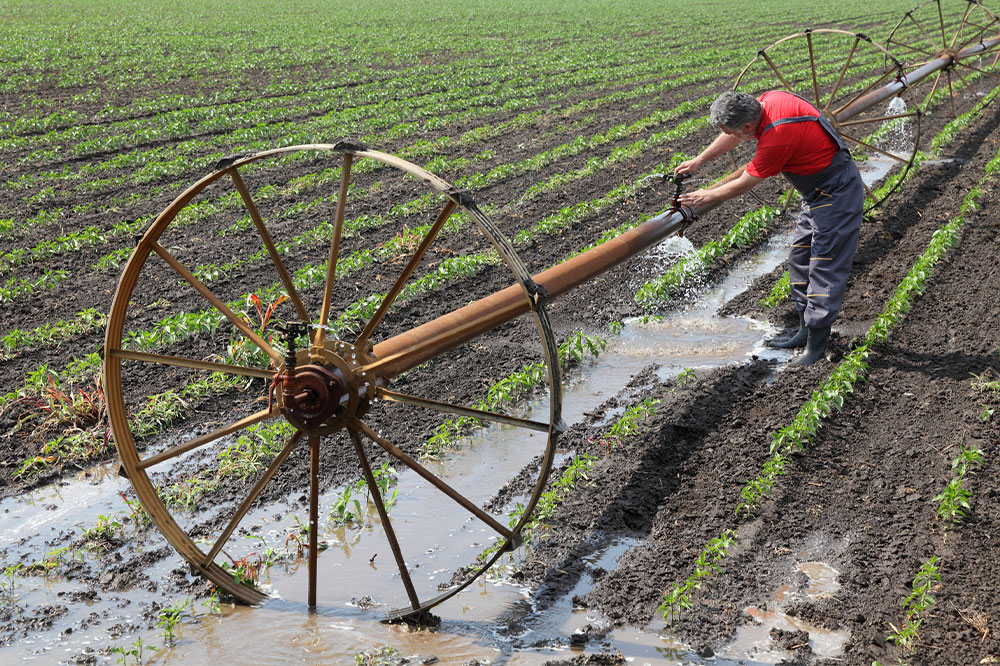
This technique employs a series of pipelines and wheeled sprinkler units that slowly traverse across fields, providing consistent water distribution. It’s a cost-effective solution for large agricultural plots but may require regular adjustments and maintenance to ensure proper operation.
Sub-surface (Sub-irrigation)
Ideal for areas with high water tables or where surface water restrictions apply, this method raises underground water levels through piping and pumping stations to provide moisture directly to roots from below soil surface. It often involves installing perforated pipes beneath the soil, ensuring moisture reaches deep-rooted plants without surface runoff.
Manual Watering
The simplest and most economical form of irrigation involves hand-held tools like watering cans or hoses with spray nozzles. Manual watering allows precise control over watering and is suitable for small gardens, delicate plants, or specialty flowerbeds requiring careful attention.
Installation Tips for Effective Irrigation Systems
Proper installation is critical to maximize efficiency and ensure longevity. Here are key tips to consider:
Strategic Planning: Divide your garden into zones based on plant watering needs. Position sprinkler heads or emitters to achieve uniform coverage, avoiding dry spots or oversaturation.
Site Preparation: Remove existing sod or obstructions before digging trenches for pipes. Temporarily lift and set aside grass to facilitate seamless installation, then replace it carefully to maintain landscape integrity.
Pipe Placement and Material Selection: Use high-quality polyethylene pipes for durability and flexibility. Bury pipes approximately 10 inches deep to prevent damage from surface activities and to avoid interference with plant roots. Avoid splicing underground pipes; professional consultation or equipment is recommended for precise underground connections.
Excavation Techniques: Use hand tools near utilities or sensitive areas to prevent accidents. When installing pipes under sidewalks or driveways, horizontal boring machines allow seamless installation beneath obstacles without surface disruption.
Cutting and Fitting Pipes: Use specialized poly pipe cutters for clean cuts, preventing shavings that could clog emitters or nozzles. Proper fitting ensures leak-proof connections and long-term system integrity.
Securing Main and Lateral Lines: Reinforce main lines with double clamps or strong fittings to withstand water pressure. Proper securing reduces leaks and system failures, extending the lifespan of your irrigation setup.
Choosing Fittings: Self-tapping fittings or saddle connectors allow quick, secure underground connections without extensive digging. These fittings simplify expansion or repair tasks.
Implementing Smart Control Systems: Modern irrigation benefits from automated controllers that respond to weather data and soil moisture sensors. These systems adjust watering schedules dynamically, conserving water and reducing waste — a sustainable approach for environmentally conscious gardeners.
In addition to proper installation, regular maintenance is essential. Cleaning pipes and filters prevents clogging, while inspecting sprinkler heads for damage ensures uniform watering. Protecting components from rust or frost damage extends system lifespan. Common repair tasks include replacing broken sprinkler heads or fixing leaks — for complex issues, it’s advisable to consult professional irrigation repair services to avoid costly mistakes and ensure the system operates efficiently year-round.