Comprehensive Guide to Safe and Effective Bee Hive Removal
This comprehensive guide offers detailed steps for safely removing bee hives from your property. It highlights precautions, humane removal methods, and prevention tips to protect both your home and bee populations. Learn how to handle bee activity responsibly and prevent future invasions with expert advice and practical strategies to ensure safety and ecological harmony.
Comprehensive Guide to Safe and Effective Bee Hive Removal
Beekeeping and the presence of bee hives can be fascinating and beneficial for ecosystems, but when they appear in or around your home, especially within wall cavities or in your yard, they can pose safety concerns and structural issues. Understanding how to handle such situations safely and humanely is essential. This detailed guide provides insights into recognizing bee activity, ensuring safety, and effectively removing or relocating bee hives without harming the bees or risking your safety.
Although a bee hive can be a stunning natural sight, its presence in unwanted areas necessitates careful action. Bees are generally gentle and non-aggressive unless threatened, but their stings can cause allergic reactions in some individuals. In this article, we discuss safety precautions, removal methods, and tips on preventing future hive formations, along with how to engage professional beekeepers or pest control services for safe hive relocation.
When you notice buzzing sounds or bees around your property, it’s crucial to stay calm and avoid panic. The first step is understanding the natural behavior of bees. They are not inherently aggressive and typically only sting when they feel threatened or provoked. This makes it important to approach hive removal with caution and patience. Proper handling can ensure the safety of you, your family, and the beloved bees—who are vital pollinators—while protecting your property from damage.
Before contacting bee removal professionals, follow these critical safety guidelines to minimize risks:
Maintain a Safe Distance
Keep children and pets away from the hive area to prevent accidental disturbances. This is vital because sudden movements or proximity can trigger defensive behavior from the bees, increasing the likelihood of stings.
Avoid Chemical Use
Refrain from using pesticides, sprays, or other chemical treatments. These substances can provoke aggressive responses from the hive and contribute to the decline of bee populations, which are already facing global threats. Instead, consider non-toxic, humane options such as hive relocation methods.
Minimize Disturbances
Do not attempt to hit, throw objects at, or shake the hive. Such actions can cause the bees to become defensive and sting in self-protection.
Another essential aspect involves locating where the bees are entering or exiting your home. Identification of the access points can help in planning safe removal strategies. However, avoid sealing these entrances prematurely because it may trap the hive and cause the bees to relocate unpredictably into other parts of your property or structure. For proper removal, consulting professional beekeepers or pest control specialists is highly recommended, especially if you lack experience.
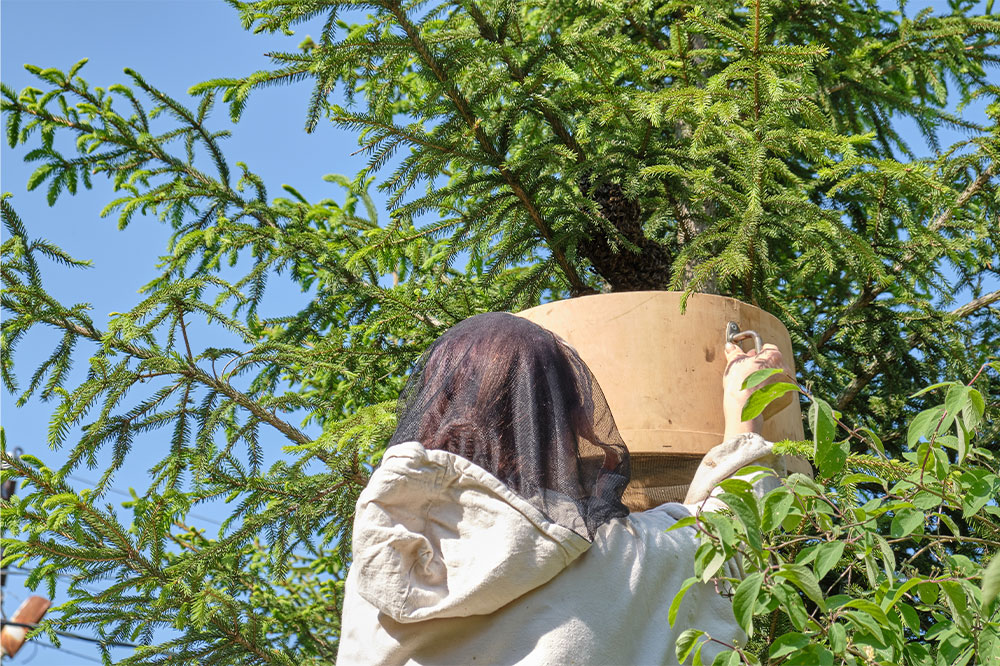
Many beekeepers and hive removal services focus on honey bees rather than wasps or other insects and often offer humane and environmentally friendly options. When seeking help, send clear photographs of the hive to verify the bee species before proceeding. This ensures the right approach is taken, and it can prevent unintentional harm or misidentification. If a beekeeper agrees to help but the swarm departs before their arrival, inform them immediately so arrangements can be rescheduled.
Local authorities, agricultural extension offices, and honey suppliers can often provide recommendations for reputable hive removal services. Always ask for details about fees, methods, and whether the bees will be harmed during removal. Some beekeepers may charge a fee if the bees leave before they arrive, so clarifying these aspects upfront saves trouble later on. If direct contacts are unavailable, seek recommendations from local farmers, gardening centers, or beekeeping supply stores.
Prevent Future Bee Colonies
After successful hive removal, implementing preventative measures can significantly reduce the chances of re-infestation. Regular property inspections, especially before seasons when swarming is common, are crucial. Seal potential entry points such as gaps, cracks, and holes in walls, eaves, and foundation using expandable foam or sealant suitable for outdoor use.
Repair any damaged wood structures, particularly around floor joists, decks, or attics, to eliminate crevices that could serve as nesting sites for future colonies. Maintaining your yard by removing clutter, fallen branches, old equipment, and debris creates less attractive environments for scout bees and reduces the likelihood of new hives forming.
Applying bee-repellent sprays sparingly around the perimeter of your house can discourage bees from scouting the area. Ensure any repellents used are environmentally friendly and safe for other pollinators. Clear away leftover honeycomb residues, old wax, and pheromone traces that could attract returning or scouting bees. For natural deterrence, planting bee-repellent flora around your property can also be beneficial.
Many bee swarms are transient and tend to leave within a few days naturally. If the hive is situated in a hard-to-access or delicate area, consider leaving it undisturbed or consulting professional beekeepers for assistance. Observing from a safe distance offers an opportunity to appreciate these natural structures, contributing to ecological awareness and respect for pollinator populations.
Human safety, bee conservation, and property preservation form the core of effective hive management. With a combination of vigilant observation, non-invasive removal techniques, and ongoing prevention strategies, you can peacefully coexist with these vital insects while safeguarding your home.
Remember: When in doubt, always turn to professional beekeepers or licensed pest control services to handle hive removal safely and humanely. Their expertise ensures minimal disruption to the bees and maximum safety for everyone involved.