Closing the Rural Digital Divide: 5G, Satellite, and Smart Wi‑Fi in 2026
From fixed wireless and 5G to low‑orbit satellite and mesh Wi‑Fi, discover the best rural internet options for 2026. Get online anywhere.
The Rural Internet Landscape in 2026
For decades, rural families faced a simple math problem: every mile of cable served only a handful of homes, making investment slow and coverage spotty. By 2026, the picture has changed. Fixed wireless towers, low‑Earth‑orbit satellites, and improved local Wi‑Fi are turning remote addresses into connected hubs. This article breaks down the real options—ground, sky, and inside your home—so you can build a setup that works for work, school, farming, and daily life.
Ground‑Based Solutions: Fiber, Cable, and Fixed Wireless
Fiber and Cable: Gold Standard Where Available
Direct fiber or cable remains the top choice for low latency and high stability. However, it is rarely available on remote roads because trenching across forests, hills, and wetlands is costly. If a provider runs fiber within a few miles, it is worth pursuing—but in many areas, it simply is not an option.
Fixed Wireless and 5G: Fast Deployment for Scattered Homes
New towers on ridges and highways now carry 5G signals that can be converted to whole‑house Wi‑Fi via a rooftop receiver. When fed by strong fiber backhaul, these towers become digital main streets. Speeds are adequate for streaming, video calls, and remote work, though terrain like steep hills or dense forests can block signals. In fringe areas, a high‑gain outdoor antenna can pull usable speeds from distant towers.
| Option type | Strengths for rural users | Typical weak spots |
|---|---|---|
| Direct fiber / cable | Very low delay, high stability, heavy workloads | Rare on remote roads, costly to extend |
| Fixed wireless / 5G | Fast to deploy, good fit for scattered homes | Signal blocked by terrain, towers can be crowded |
| Legacy copper lines | Existing routes, simple phone bundles | Limited speeds, aging gear, weather‑sensitive |
Satellite Internet: Where Wires Can't Reach
Low‑Earth Orbit Satellite Systems
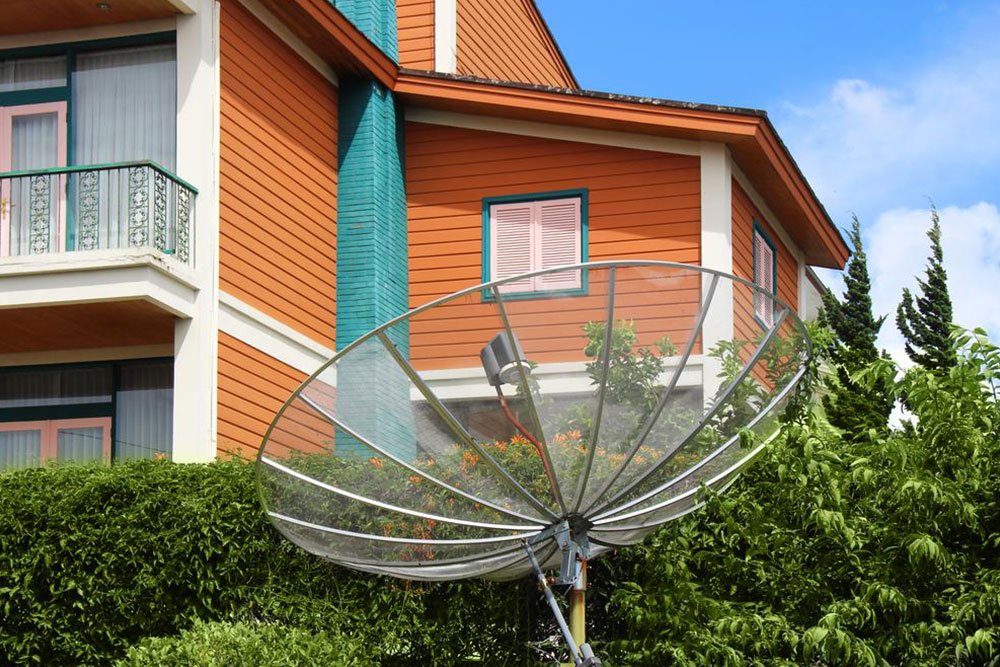
For homes far from any tower, a dish on the roof remains the only practical path. Modern low‑orbit constellations orbit much closer than older geostationary satellites, cutting latency dramatically. Video calls become smooth, and even competitive gaming is feasible. With a clear sky view, these systems can serve cabins, ranches, and remote work sites.
Trade‑offs and Realities
Equipment and installation cost more than a typical landline plan. Many providers enforce soft caps or slowdowns during peak hours, and heavy rain or snow can briefly degrade performance. Still, for families used to dial‑up speeds, a stable satellite link is a massive leap forward.
Inside Your Property: Wi‑Fi and Local Networks
Why the Last 100 Feet Matter
A powerful tower or satellite feed is wasted if the Wi‑Fi inside the home is weak. Rural buildings often have thick walls, steel sheds, and large yards. Place the main router centrally, run Ethernet where possible, and add mesh nodes to cover outbuildings. On farms, rugged outdoor access points extend connectivity to barns, pens, and machine sheds.
| Main priority | Helpful local setup |
|---|---|
| School and remote office at home | Strong indoor mesh Wi‑Fi, stable modem or 5G gateway |
| Production on farms and shops | Outdoor access points, wired links to key machines |
| Remote monitoring and safety | Mix of Wi‑Fi, cameras, and low‑power satellite or radio tags |
Building Your Rural Internet Strategy for 2026
Start with Your Location and Needs
Map what actually reaches your address: which wired providers serve your lane, which cellular networks have solid outdoor signal, and whether a clear sky view exists for a dish. Then list tasks that cannot fail—video meetings, virtual classes, telehealth. Those anchor needs set your minimum speed, latency, and reliability targets. Entertainment can wait; essential tasks drive the decision.
Consider a Primary Plus Backup Setup
In rural areas, a backup connection is not a luxury. Common pattern: fiber, fixed wireless, or satellite as primary; a phone hotspot on a different carrier or a smaller satellite plan as backup. This can save a missed deadline or a lost paycheck.
Treat Connectivity as Long‑Term Infrastructure
Picking a rural internet setup in 2026 is about building a foundation that can adapt. Networks and family needs evolve. A choice that respects local terrain, power reliability, and budget—and leaves room to add a second path later—will age better than any one‑size‑fits‑all bundle.
Frequently Asked Questions
What is usually the best 5G home internet option for rural areas with weak cell signal?
In fringe coverage areas, the best choice is often 5G home internet paired with a high‑gain outdoor antenna and a professionally aligned router, which can pull usable speeds from distant towers and stabilize performance compared to basic indoor gateways.
How can I find fixed wireless internet providers near me in a rural location?
Use FCC and BroadbandUSA maps, then search “fixed wireless internet” plus your county; cross‑check local WISPs, electric co‑ops, and farm bureaus, which often maintain lists of tower‑based providers serving unmarked backroads.
Are “high‑speed satellite internet with unlimited data” plans truly unlimited?
Many “unlimited” satellite plans use fair‑use thresholds; after a certain amount of priority data, speeds may be deprioritized at busy times, so read the acceptable use policy and look for plans with the highest priority data bucket for your household.
Is low‑latency satellite internet good enough for competitive online gaming?
Newer low‑Earth‑orbit satellite systems can deliver latency similar to 4G, making casual and many competitive games playable, but serious e‑sports players may still prefer fiber, cable, or strong fixed wireless due to more consistent ping and jitter.
What rural business internet solutions work best for farms and small rural companies without cable access?
A robust setup often combines fixed wireless or 5G as primary, satellite as backup, business‑grade routers with failover, and outdoor Wi‑Fi for barns or fields, ensuring continuity for POS systems, cloud apps, cameras, and precision agriculture tools.