32,000-Year-Old Woolly Rhino Unearthed in Siberia Reveals Fatty Hump and Blade-Like Horn
A 32,000-year-old woolly rhino with a fatty hump and blade horn was discovered in Siberian permafrost. The find offers new insights into Ice Age adaptations.
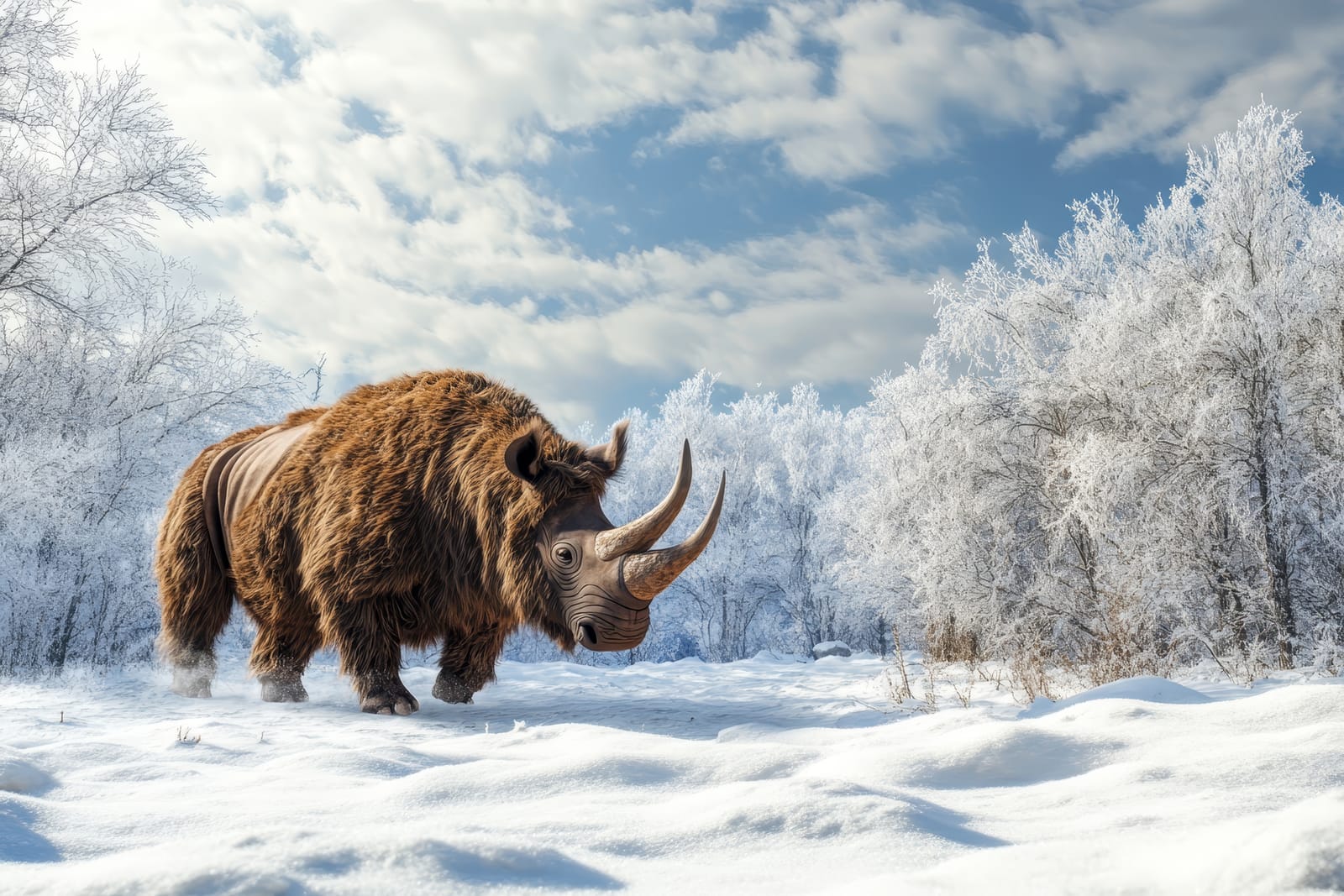
Exceptional Permafrost Discovery
In August 2020, Russian scientists from Yakutsk and Moscow recovered an astonishingly well-preserved woolly rhino from the banks of Siberia's Tirekhtyakh River. The specimen, estimated at roughly 32,000 years old and only four years old when it died, is among the most complete Ice Age rhinos ever recorded.
Unique Physical Traits
Fatty Hump for Energy Storage
A prominent fatty hump on the animal's back mirrors adaptations seen in modern Arctic species. This hump stored energy that could be converted to heat without shivering — a crucial survival feature during the severe Ice Age winters.
Blade-Shaped Front Horn
Unlike modern rhinos, this woolly rhino had two horns. The front horn was large and blade-shaped, likely used to dig through snow for vegetation or to defend against predators in the frozen environment.
Preservation and Sampling
The right side of the carcass remained remarkably intact, with soft tissues such as fur, skin, and the fatty hump present. The left side showed damage from scavengers. Scientists temporarily thawed the specimen to collect samples. Although most intestines were gone, internal organs were partially exposed, offering valuable insights.
Fur Color and Age Clues
The preserved fur was light brown with a softer underlayer. Comparisons with other specimens showed that younger woolly rhinos had much lighter, almost blonde hair that darkened and coarsened with maturity.
Scientific Implications
Well-preserved soft tissues enable genetic testing beyond what bones can provide, opening pathways to understand the genetic makeup, health, and adaptive strategies of extinct species. The findings were published in Doklady Earth Sciences.
Ongoing Siberian Discoveries
Local communities often tunnel into permafrost searching for mammoth tusks. Under agreements with authorities, they must report significant finds to paleontologists. This ensures a steady stream of specimens like this woolly rhino, continuously refining our understanding of Ice Age life.