Construction Site Security: Essential Measures, Roles, and Latest Technology
Key construction site security measures, guard roles, and tech advances like AI and drones to protect assets and personnel.
The Importance of Construction Site Security
Construction sites face constant threats from theft, vandalism, and safety risks. Without robust security, valuable equipment and materials can be stolen, and unauthorized access can lead to injuries or project delays. A well-designed security strategy protects assets, personnel, and timelines through a combination of physical defenses, monitoring technology, and skilled staff.
Key Security Components
Perimeter Defenses
The first line of defense is a strong boundary. Durable fencing, such as chain-link or solid panels, reinforced with barbed wire or razor wire in high-risk areas, creates a clear barrier. Regular inspections and motion-activated floodlights further deter intruders and improve visibility at night.
Access Management
Controlling who enters the site is critical. Badge readers, biometric scanners, and manned checkpoints verify the identity of every worker, subcontractor, and visitor. Detailed entry logs provide accountability and help in investigations if incidents occur.
Video Surveillance
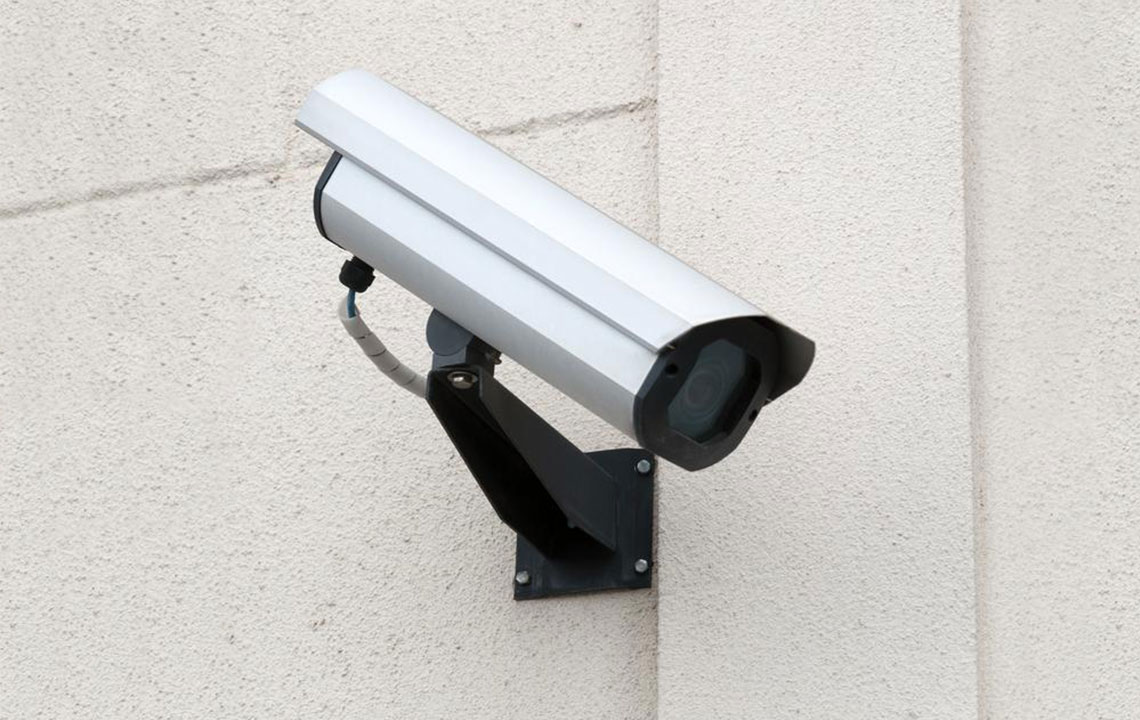
Modern CCTV systems equipped with AI analytics, motion detection, and night vision monitor the site 24/7. Cameras placed at strategic locations capture evidence and deter criminal activity. Wireless and mobile units can be relocated as the site changes, offering flexibility.
Security Personnel
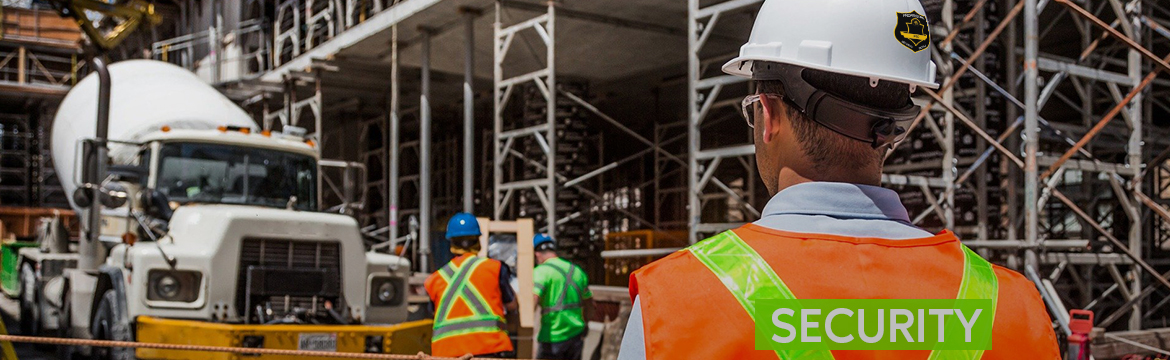
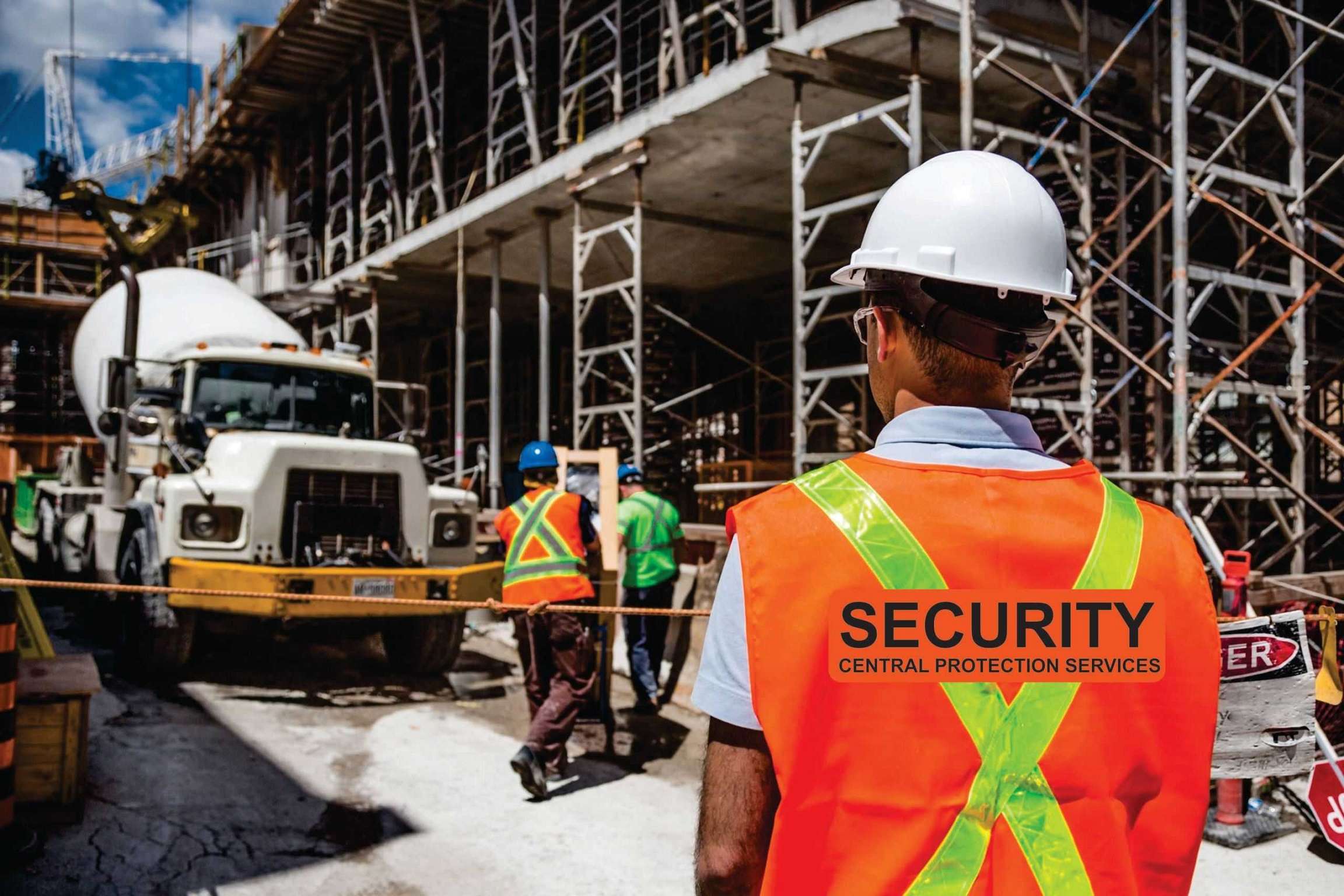
Trained guards are the human element of security. They patrol the perimeter, monitor entry points, enforce rules, and respond to alarms. Their visible presence discourages wrongdoing. Supervisors coordinate teams, train new recruits, and adjust protocols based on site needs.
Illumination
Good lighting is a simple but effective deterrent. Motion-activated floodlights placed throughout the site ensure that dark corners are eliminated, making it harder for intruders to hide. Adequate lighting also improves safety for workers who may be on site after hours.
Roles in the Security Team
Guards
Guards are the frontline. They handle access verification, patrol the site, and maintain logs. Their constant presence provides reassurance and quick reaction to suspicious activity.
Supervisors
Supervisors manage guard schedules, conduct performance reviews, and ensure policies are followed. They act as a liaison between security and project management, adapting strategies as needed.
CCTV Operators
Operators watch live feeds in real time, looking for unusual behavior. They can zoom in on incidents, record evidence, and alert guards when necessary.
Access Control Specialists
These specialists manage the electronic systems—card readers, biometrics, and user permissions. They issue and deactivate credentials, troubleshoot issues, and maintain secure access to sensitive areas.
Advances in Surveillance Technology
AI-Powered Analytics
Artificial intelligence reduces false alarms by distinguishing people, vehicles, and animals. It can automatically detect when someone enters a restricted zone after hours and trigger an alert.
Wireless and Mobile Cameras
Solar-powered cameras with cellular connectivity can be placed anywhere without running cables. As the site expands, cameras can be moved to new priority areas.
Integration with Access Control Systems
When a badge or biometric is used, cameras capture an image linking the person to the event. This provides a seamless audit trail and enforces zone restrictions.
Remote Monitoring
Authorized personnel can view live footage from any device with internet access. This allows off-site managers to verify security compliance even outside working hours and respond quickly to incidents.
Future Directions
Emerging trends include drone patrols for aerial surveillance, advanced biometrics like facial recognition and gait analysis, and stronger cybersecurity for IoT devices. AI will continue to evolve, predicting threats based on behavioral patterns and further automating security processes.
Frequently Asked Questions
Q1: What are the key elements of construction site security?
A: The main elements are access control, surveillance, trained security staff, and proper lighting. These work together to prevent theft, vandalism, and safety incidents.
Q2: Who is typically part of a security team?
A: A team usually includes guards for patrol and access, supervisors for management, CCTV operators for monitoring, and access control specialists for system upkeep.
Q3: How has technology improved site security?
A: AI analytics cut down false alarms, wireless cameras offer flexibility, high-definition footage provides evidence, and remote monitoring enables off-site oversight.
Q4: What are common security challenges on construction sites?
A: Theft, vandalism, worker safety compliance, managing remote locations, and environmental hazards. Integrated solutions like smart sensors and real time data help address these.
Q5: What future innovations are expected?
A: AI-driven threat prediction, drone patrols, biometric access (fingerprint, iris), and enhanced cybersecurity for connected devices will further strengthen site protection.
Data source: Construction Dive, 2024