How Modern Space Exploration Redefines Our Cosmic View: Rovers, Rockets, and Reusable Boosters
Explore how rovers, reusable rockets, and space telescopes are transforming our cosmic view—from Mars deltas to icy moons and gravitational waves.
Bigger Rockets and Reusable Boosters Reshape Mission Planning
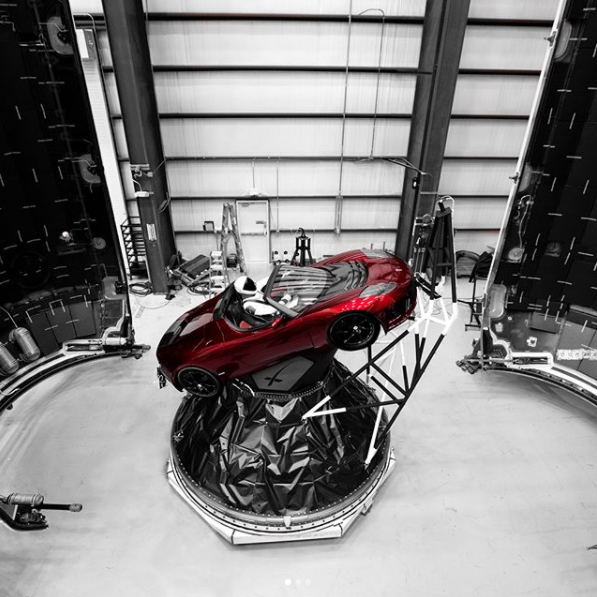
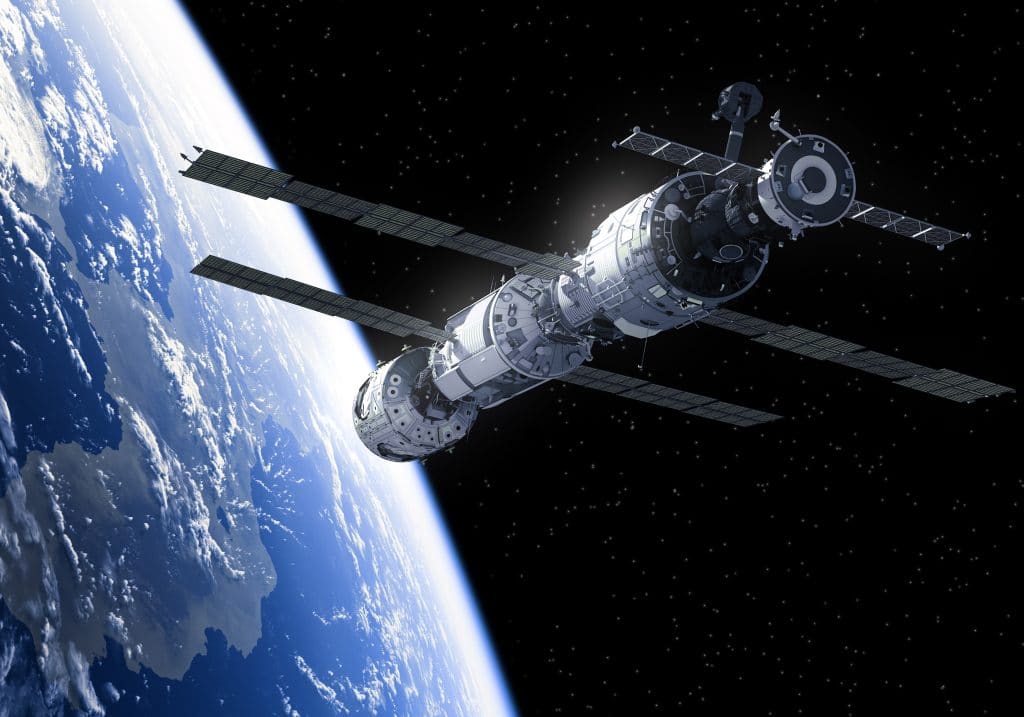
Every ambitious space mission begins by battling gravity and mass. Heavy-lift launchers allow engineers to design massive observatories and deep-space probes without extreme miniaturization. Large mirrors, thick sunshields, and advanced cooling systems become feasible, delivering sharper images and broader wavelength coverage. Meanwhile, reusable boosters slash launch costs and increase flight frequency. Instead of betting decades on a single flagship, space agencies can now launch families of missions. A pathfinder tests new hardware, then more capable craft follow based on initial findings. Even experimental instruments can hitch rides as secondary payloads, turning astronomy into an iterative, fast-evolving field.
Mars and the Moon: From Distant Dots to Real Landscapes
Rovers as Field Geologists
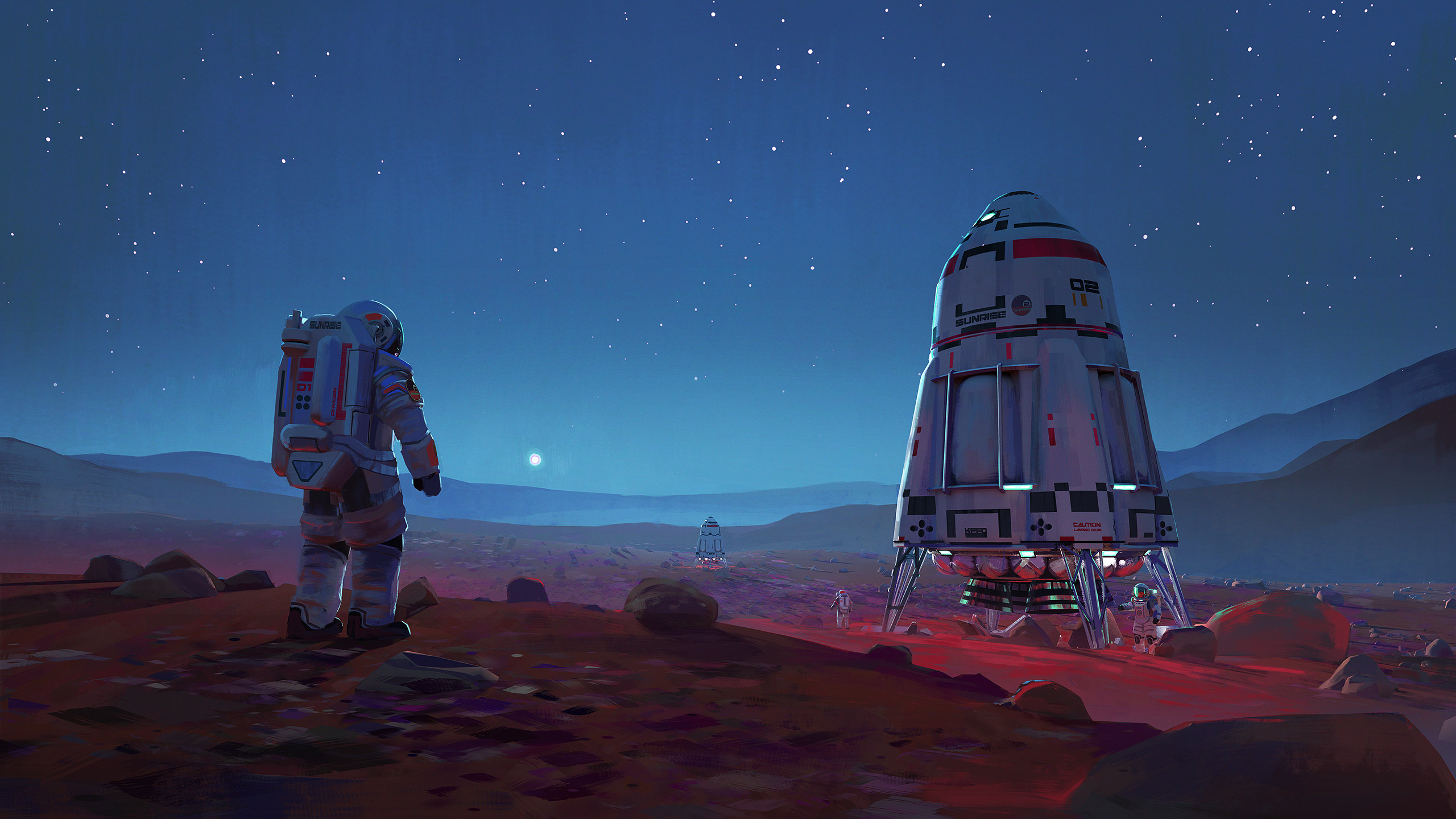
Modern Mars rovers no longer drill at random. They scout ancient lake beds, dry river channels, and layered deltas, selecting the most promising outcrops for sampling. Fine-grained sediments are sealed inside protective tubes, preserving chemical patterns that could hint at past life. These cores will be returned to Earth by future missions, where scientists will analyze them under powerful microscopes and spectrometers, searching for organic molecules and signs that chemistry was once guided by biology.
The Moon: A Nearby Practice Site and Refueling Stop
Closer to home, the Moon is being reimagined as both a scientific target and a training ground. Landers target polar craters where ice persists in permanent shadows. That ice could be turned into drinking water, oxygen, and rocket propellant, turning the Moon into a refueling station. Crews training there learn vital lessons about dust, radiation, and low gravity—knowledge that directly feeds Mars mission planning.
| Exploration Target | Why It Matters for Life-Friendly Conditions | Typical Mission Style |
|---|---|---|
| Dry river deltas on Mars | Preserve records of long-lived surface water and potential organics | Rovers and planned sample-return |
| Icy moons with subsurface oceans | Combine liquid water, chemistry, and energy away from starlight | Orbiters and plume-sniffing flybys |
| Lunar polar craters | Offer accessible ice and test-beds for resource use | Landers, scouts, and future crewed visits |
Icy Moons: Hidden Oceans and Dark Habitats
Farther from the Sun, icy moons orbiting giant planets have become prime targets in the hunt for habitable environments. Thick crusts of ice may hide global oceans kept liquid by internal heating. Orbiters map surfaces scored by cracks, measure gravity fields to infer interior layers, and watch for plumes of water vapor jetting into space. By sampling those plumes directly, instruments can test for complex molecules, salts, and energy sources that might support chemistry in permanent darkness. These missions treat each moon as a self-contained world with its own geology and tides, expanding the idea of where comfortable conditions might exist.
Telescopes Above the Atmosphere and Multi-Messenger Observations
Infrared Eyes in Space
Many crucial wavelengths never reach the ground because water vapor blocks them. Space telescopes, cooled by large sunshields, gain access to the faint glow of first-generation galaxies, cool dust clouds, and subtle molecular features. These observatories must be folded, launched atop powerful rockets, and then unfolded with exquisite precision. When everything works, they deliver images of star nurseries and dim planets with clarity no ground-based mirror can match at those colors.
Listening to Ripples in Spacetime
Gravitational-wave detectors sense the stretching of spacetime when massive objects merge. Ground instruments already pick up high-frequency signals from colliding black holes and neutron stars. Planned space-based versions will fly multiple spacecraft millions of kilometers apart, using lasers to measure tiny distance changes as slower, deeper waves pass through. This opens a new hearing range on the universe.
Swarms, Surveys, and the Power of Many Small Eyes
Clusters of small satellites scan huge regions of sky for short-lived flashes: stellar explosions, bursts of high-energy radiation, or counterparts to gravitational-wave events. When an interesting signal appears, alerts race across networks so larger telescopes can observe in detail. Some constellations map how galaxies cluster and drift, probing dark matter. Others monitor our star’s activity, linking solar storms to planetary atmospheres. Together, big and small instruments turn the sky from a static backdrop into a dynamic, monitored arena.
A Changing Cosmic Story and Our Place in It
Updating the Mental Atlas of the Cosmos
Rovers on dusty plains, orbiters around icy moons, telescopes in deep space, and detectors of invisible waves are all feeding into a shared, shifting picture. Mars now looks like a world with rivers, lakes, and perhaps lingering records of ancient habitability. The Moon becomes a possible logistics hub. Icy moons go from afterthoughts to serious contenders for complex chemistry. Far out, early galaxies appear surprisingly mature, challenging old models. Ripples in spacetime and a faint background glow refine ideas about how everything began.
From Unreachable Backdrop to Evolving Neighborhood
The most subtle shift is emotional. The night sky once felt like a fixed dome of unreachable lights. Now, planets have weather, seasons, and real landscapes that people can imagine standing on. Spaceflight has not shrunk the universe, but it has turned it from a passive backdrop into an active, evolving neighborhood—one that humanity, through machines and eventually in person, is beginning to explore as participants rather than distant spectators.
Key Questions and Answers
How is current astronomy research changing our understanding of exoplanets?
Astronomers now use high-precision spectroscopy and transit timing to infer atmospheric composition, weather patterns, and even potential biosignatures, transforming exoplanets from data points into partially characterized worlds.
What unique scientific goals distinguish a Mars mission from other planetary missions?
Mars missions focus on past habitability, preserved organics in ancient sediments, subsurface ice mapping, and preparing in-situ resource utilization for future human crews—unlike gas-giant or icy-moon missions.
How is modern satellite technology accelerating cosmic discovery?
Constellations of small, synchronized satellites enable continuous multiwavelength monitoring and rapid follow-up of transient events like fast radio bursts and gravitational-wave counterparts, shortening discovery timescales.
Why is universe study increasingly dependent on multi-messenger observations?
Combining light, gravitational waves, neutrinos, and cosmic rays reveals source physics that single messengers miss, resolving mysteries about black hole mergers, neutron star collisions, and high-energy particle origins.
What breakthroughs in space travel are most critical for deep-space exploration?
High-efficiency propulsion, radiation shielding, closed-loop life support, and autonomous navigation are essential to reduce travel time, protect crews, and enable sustainable missions beyond Mars into the outer solar system.